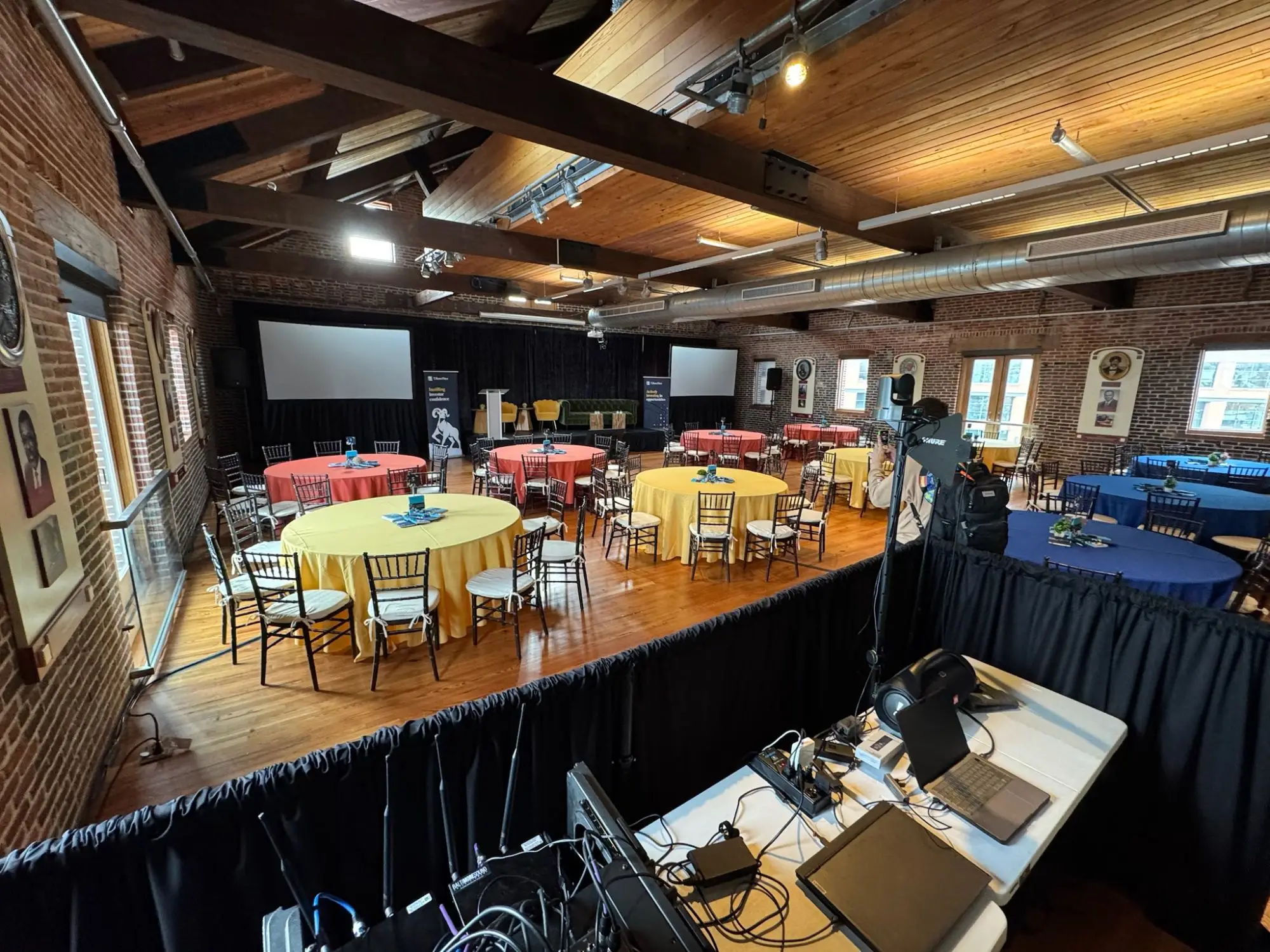
A conference AV company has to solve a different problem than a single-room show: three days, six rooms, forty presenters, and a schedule where every session inherits the previous one’s delays. We produce conferences as one program (one advance, one crew plan, one person accountable) instead of a general session with some breakouts bolted on.
What goes wrong at conferences
Conferences fail in the seams. The general session is rehearsed and fine; it’s the 2 p.m. breakout where the presenter’s laptop won’t connect, there’s no tech within three rooms, and fifteen minutes of a forty-five-minute session evaporate. Panel microphones get budgeted at two for a four-person panel. Room turnovers get scheduled with zero reset time, so the afternoon runs late everywhere at once. And the recording plan gets remembered on day two, after the keynote everyone wanted is gone.
The pattern behind all of it: the schedule was designed as a content document, and nobody translated it into a technical one. That translation is most of what we do.
What the AV plan should cover
- The general session — full program audio, screens or LED, presenter lighting, and playback, rehearsed. See event audio and video & LED.
- Every breakout, specced to its content — a panel needs different audio than a workshop; a demo needs different video than a lecture.
- Roaming technical coverage — techs with radios assigned across breakout rooms, so “the clicker died in room B” is a two-minute event.
- Turnover and reset time — built into the schedule with the AV plan instead of discovered by it.
- Recording and streaming — decided per session against what you’ll actually publish. See hybrid & streaming.
- Show management — a production lead running the technical schedule across rooms. See show production.
Timeline expectations
Multi-room conferences want eight to sixteen weeks of runway — venue advance, per-room designs, speaker content wrangling, and crew scheduling all take real calendar time. The last two weeks are for locking the run of show and collecting presenter content against a deadline with teeth.
What drives the budget
Simultaneous rooms is the biggest driver: each concurrent room needs its own gear and coverage. Days on site multiply crew and, sometimes, overnight security for the gear. The general session’s ambition (LED vs. projection, camera count, entertainment) sets the peak. Recording and streaming add per-session cost that’s easy to right-size if it’s decided early. We’ll build the budget openly around those levers so you can trade scope, not quality.