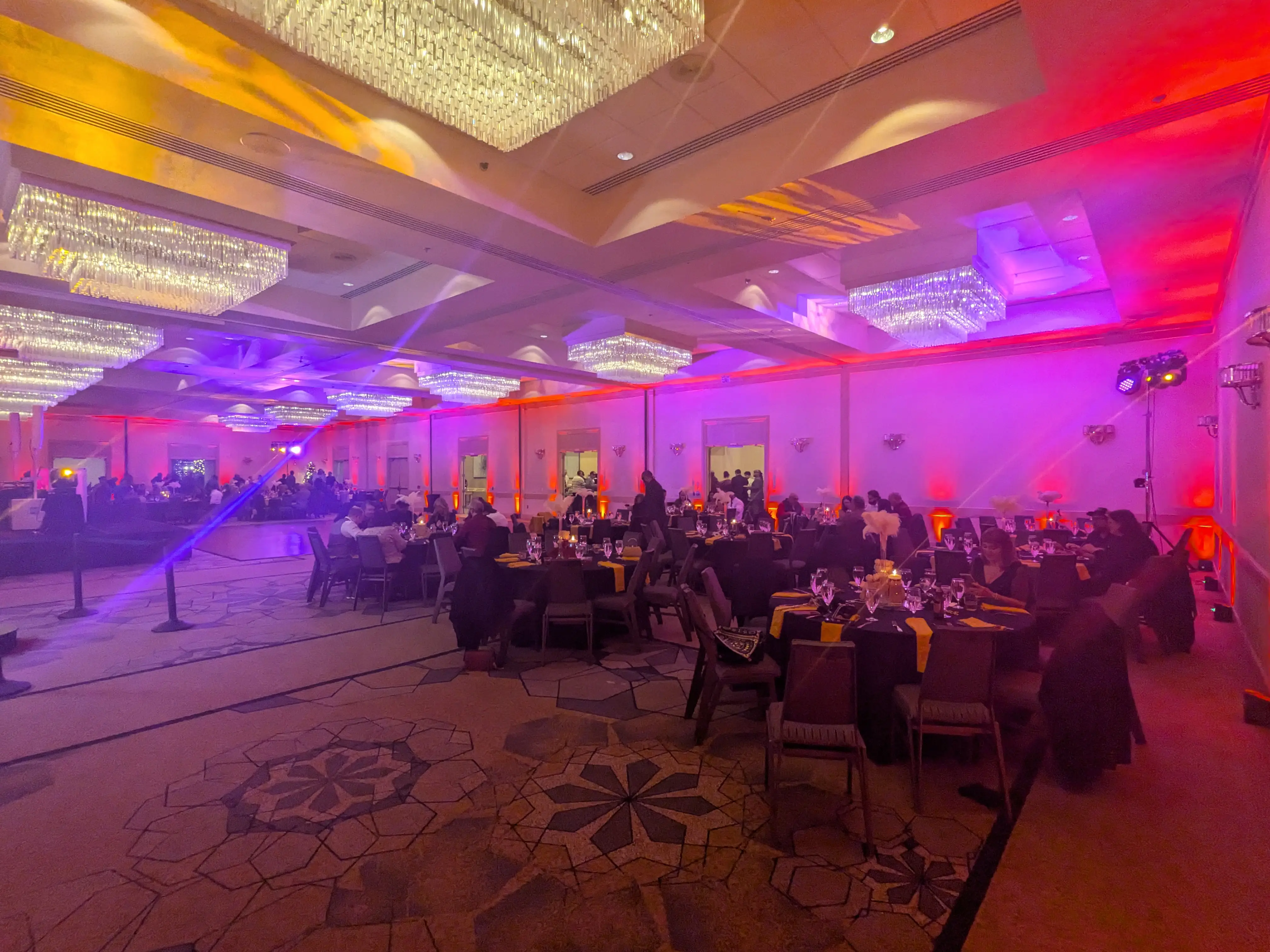
Event lighting in Baltimore usually gets bought last and noticed first. A room can survive average sound for a cocktail hour; it cannot survive a keynote speaker lit by a ballroom chandelier, or a gala where the auctioneer is a silhouette. We design, hang, focus, and operate event lighting ourselves. The fixtures never show up without the crew.
What this covers
- Stage and presenter lighting — front wash that makes faces read from the back row and on camera, backlight that separates people from the set, specced per program.
- Intelligent (moving) fixtures — color, texture, and movement for award reveals, walk-ups, entertainment sets, and moments that need the room’s attention pulled somewhere.
- Room and architectural lighting — uplighting, pin-spotted centerpieces, textured washes on walls and ceilings, and color set to your brand or your event’s palette.
- Ballroom and general-session rigs — full designs coordinated with the venue’s rigging rules, house electrician, and your staging plan.
- Show operation — a lighting operator running cues live through your program, not a static look switched on at load-in and abandoned.
What’s always included
Every lighting production includes a design conversation before we quote, a hang and focus scheduled around the venue’s access windows, safety-rated rigging or ground support per the room’s rules, and an operator through the program. Cues are built during the advance (walk-in, program, reveal, dinner, dancing), so transitions happen on time instead of when someone finds the technician.
How we spec it
Faces first. Every design starts at the podium and the panel chairs: can the back row read expressions, and will the cameras get skin tones instead of shadows? Only after faces work do we spend budget on the room look. Plenty of competitors sell it the other way around because color washes demo better than front light.
The room dictates the rig. A ballroom with rigging points gets a flown design that keeps sightlines clean. A historic hall with no rig gets lighting trees placed where they won’t block views or fire lanes. We ask the venue the rigging question before we design. It’s the single biggest cost variable in event lighting.
Lighting runs on cues. A static “set it and forget it” wash ignores that your event changes shape across the evening: walk-in, program, dinner, dancing all want different rooms. We build a cue list from your run of show during the advance, so the room changes when the event does.
How we power all of it without tripping a ballroom breaker is on the standards page.